ITSM behind every successful digital organisation
Effective IT service management sits behind every successful digital organisation. As businesses across Germany continue to modernise their technology estates, adopt cloud platforms and support increasingly complex user environments, demand is growing for professionals who can ensure IT services remain reliable, efficient and aligned with business needs.
Starting your Career in ITSM
Expert advice from Associate Director, Kumar Gawri
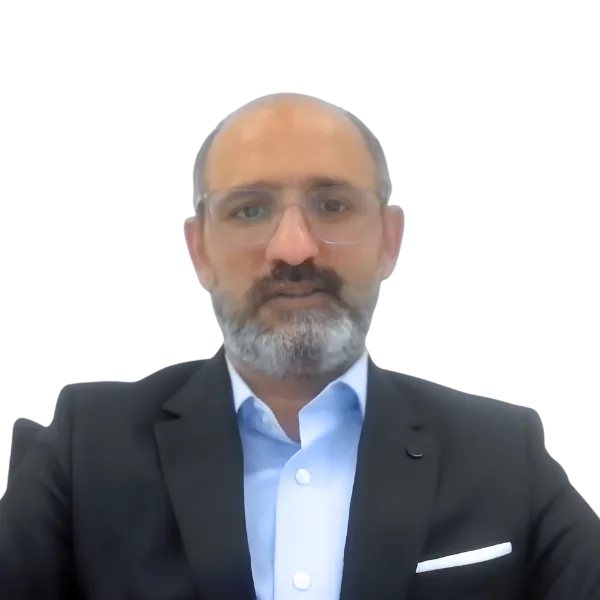
ITIL Foundation is close to a standard expectation even for entry-level roles, and it gives candidates the shared vocabulary that employers assume when they write a job description. It is typically achievable within a few weeks, is often covered by government-funded retraining programmes, and is a reasonable first investment for anyone serious about the field.
Beyond Foundation, ITIL 4 Practitioner and Managing Professional modules are increasingly valued for mid-to-senior roles, particularly where a role involves specific responsibility for change, problem or service level management. ServiceNow certifications are a genuine differentiator given how dominant the platform is in enterprise ITSM environments. Germany also has real, homegrown alternative, matrix42 and USU, in particular, position themselves specifically on European data residency - familiarity with one of those platforms carries weight for public sector-facing roles. Candidates who can point to hands-on ServiceNow experience alongside the certification are consistently stronger candidates than those with the certification alone.
As with most technology careers, certifications open doors but do not replace demonstrable experience. The strongest candidates we place combine credible ITIL grounding with a genuine track record of measurable service improvement.
Technical understanding matters, but ITSM is unusually weighted toward a specific combination of process discipline and people skills. These are the skills we see consistently across the roles we place:
- ITIL framework knowledge: the near-universal shared language for how ITSM work gets structured and discussed.
- ITSM tooling: ServiceNow is the dominant platform in enterprise environments generally, though matrix42 and USU have genuine traction in the German public sector specifically, given their European data residency positioning; familiarity with one of the major platforms is close to a baseline requirement at mid-level and above.
- Stakeholder management: explaining service performance clearly to non-technical business stakeholders, and holding suppliers to account professionally.
- Supplier and contract management: managing relationships with managed service providers, including performance against contractual commitments.
- Data and reporting literacy: building and presenting service performance data in a way that supports decisions rather than just documenting activity.
- Change and risk management: understanding how to implement IT change safely without disrupting business operations.
- Commercial awareness: connecting service decisions to cost, budget and business outcome, not just process compliance.
- Automation awareness: growing familiarity with how automation and AI are changing service desk and request management is increasingly expected at mid-to-senior level and in Germany that increasingly means understanding when a change to how requests or performance are monitored needs works council sign-off, not just the technical rollout.
The candidates who stand out at interview are rarely the ones who can recite ITIL terminology fluently. They are the ones who can describe a specific service that was underperforming, what they actually did about it, and what changed as a result. That kind of concrete example carries far more weight than framework knowledge on its own.
The exact scope varies by organisation size and maturity, but these responsibilities show up consistently across the roles we recruit for:
- Owning service level agreements and ensuring targets are consistently met, escalating and resolving underperformance.
- Managing relationships with managed service providers and third-party suppliers, including contract performance and renewal.
- Chairing service review meetings and reporting service performance clearly to business stakeholders.
- Leading incident and problem management processes for significant or recurring issues.
- Overseeing change management to ensure IT changes are implemented with minimal business disruption, and in Germany that includes knowing when a change touches systems that monitor how people work, since those changes typically need works council sign-off before rollout, not just a technical release plan.
- Driving continuous service improvement, identifying where a service is underperforming and building a plan to fix it.
- Managing budget and cost for the services within their remit.
- Building and maintaining relationships across the business, from IT teams to senior stakeholders who depend on the service
IT Service Manager salaries vary considerably by seniority, sector and location in Germany, Stuttgart consistently comes out on top across every level of this hierarchy, reflecting its concentration of major automotive and engineering employers. Based on current market data:
| Seniority Level | Typical Permanent Salary |
| Service Desk Analyst (entry-level) | €32,000 - €40,000 |
| IT Service Manager (mid-level) | €58,000 - €74,000 |
| IT Service Manager (Stuttgart / automotive & engineering) | €65,000 - €85,000 |
| Senior IT Service Manager | €75,000 - €95,000 |
| Head of IT Service Management / IT Operations Director | €85,000 - €120,000+ |
Automotive and engineering, concentrated around Stuttgart, and financial services, concentrated around Frankfurt, both consistently pay above the general market median, reflecting the operational stakes of getting service delivery wrong in those environments.
Automotive and engineering businesses are consistent, high-volume employers of ITSM talent, particularly around Stuttgart and Munich, reflecting the scale and complexity of the technology estates behind large manufacturing operations. Financial services, concentrated around Frankfurt, is also a significant and consistent source given the regulatory complexity of the systems involved.
Managed service providers and IT consultancies employ ITSM professionals directly to deliver services to their clients, which is a genuinely distinct kind of role worth considering if you enjoy variety across multiple organisations rather than embedding within one. Public sector digital transformation programmes are a growing source too. Germany’s ITSM demand is fairly well spread across several hubs, Stuttgart, Munich, Frankfurt, Hamburg and Düsseldorf all show meaningful activity, so there isn't the same single dominant centre to work around, or against.
Remote and hybrid working has become the norm rather than the exception for mid-to-senior ITSM roles, though given how distributed the market already is, the effect here is more about flexibility than opening up access to a market that was previously concentrated in one place. Registering with a specialist recruiter matters here too, since a meaningful share of senior ITSM roles are filled through direct relationships rather than public job board listings.
Progression in your ITSM Career
Expert advice from Country Director, Jo Callaghan

ITSM offers a genuinely well-defined career ladder, which makes it an accessible and reliable route into IT management for people who do not come from a pure engineering background .In Germany, the Service Desk Analyst entry point is also a common destination for a Fachinformatiker apprenticeship or a government-funded retraining route, not just a first job for computer science graduates.
- Service Desk Analyst to Service Desk Manager: the most common entry route, building foundational incident and request management experience.
- Service Desk Manager to IT Service Manager: moving from managing a team to owning end-to-end service quality across a wider remit.
- Specialisation into Problem, Change or Service Owner roles: a common lateral move for those who find one part of the discipline particularly engaging.
- IT Service Manager to Senior Service Manager to Head of ITSM : the primary vertical path, taking on broader remit and eventually organisation-wide accountability.
- ITSM to IT Operations or Technology Leadership: for those with strong commercial and stakeholder skills, a route into broader IT leadership beyond service management specifically
What we see consistently in placements is that the professionals who reach Head of ITSM or Operations Director level are rarely the ones who stayed purely process-focused throughout their career. They are the ones who deliberately built commercial fluency and supplier negotiation experience alongside their ITIL grounding, and did so well before it became part of their job title.
The most common route is demonstrating ownership beyond your immediate ticket queue while still in a service desk role: identifying and helping resolve a recurring problem, contributing to a process improvement, or taking on informal team lead responsibilities. Employers hiring for a first IT Service Manager role are usually looking for evidence you have already been doing parts of the job, alongside ITIL Foundation certification as a baseline.
Both are common in the German market. Contract roles, particularly for transformation or service improvement projects with a defined end date, can pay well for the right specialism, and that kind of scoped, time-limited engagement is also the type of work that holds up cleanly under Germany's Scheinselbstständigkeit rules, unlike an ongoing operational IT Service Manager role embedded full time in one organisation, which carries more reclassification risk if attempted as freelance. Permanent roles offer more stability and, usually, more investment in your ongoing development. We can give you an honest picture of what is realistically available in your specialism if you are weighing the two up.
Automotive and engineering businesses are consistently the biggest source of ITSM demand in Germany, not just because of their size but because of what running them involves: large, often decades-old IT estates layered with newer cloud and automation projects, plus a growing amount of IT/OT convergence on the manufacturing side, all of which need real process discipline to keep running without disruption. That's a genuinely different driver to the more compliance-led demand you see in financial services, concentrated around Frankfurt, where ITSM exists largely to satisfy the reporting, audit and SLA obligations that come with operating under BaFin oversight.
Public sector organisations are a growing source too, and the driver there is specific: legacy system modernisation programmes and the shift toward sovereign and EU-aligned infrastructure both create a real need for people who can manage service transitions carefully rather than just technically. Managed service providers and IT consultancies are a category of their own, since for them ITSM isn't a support function, it's the product they sell, which tends to produce broader, faster-moving experience across multiple client environments rather than deep specialism in one.
Healthcare has also generated real ITSM demand through hospital digitalisation funding in recent years, though that funding picture is shifting, so it's worth treating as a smaller and less certain source of roles than the others rather than assuming it holds steady.
What our candidates say
A very professional team that quickly delivers suitable candidates. Communication is transparent and reliable - highly recommended!
Technology Client
A very professional team that quickly delivers suitable candidates. Communication is transparent and reliable - highly recommended!
Candidates Technology Client